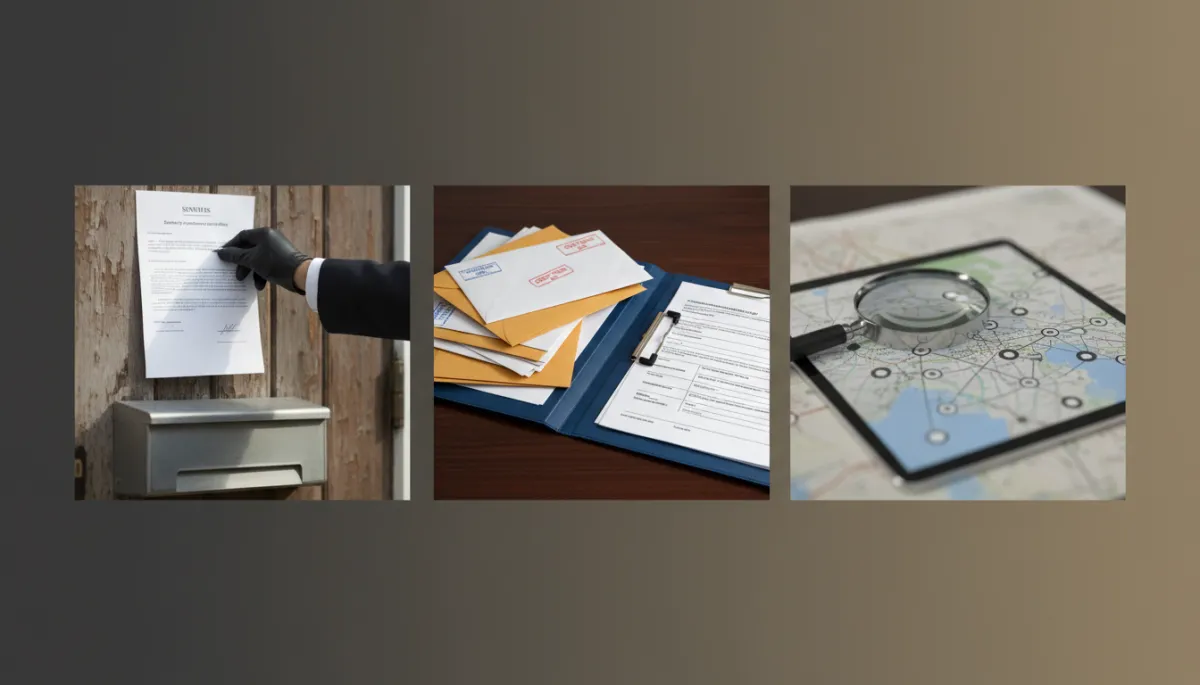
Legal Options When Service Can't Be Completed
Process Serving, California Civil Procedure
What Are Your Legal Options When Someone Can't Be Served?
When a defendant or respondent cannot be personally served, your case does not have to stall. California law provides several alternative service methods that, if properly executed, can preserve your deadlines and due process obligations.

When a Party Can't Be Served: California’s Legal Framework
In California, process serving is governed primarily by the Code of Civil Procedure (CCP). The law strongly prefers personal service, because it provides the clearest proof that a party received notice. However, courts also recognize that some individuals evade service, move frequently, or are simply difficult to locate. When a party can’t be served personally despite diligent efforts, counsel may turn to substituted service, service by mail, service by posting and mailing, service by publication, or a motion for alternative service. In many instances, effective skip tracing is the critical first step in demonstrating due diligence.
A licensed California process server plays a central role in documenting attempts, selecting legally permissible methods, and executing service in strict compliance with statute and local rules. Below is an overview of key options available when traditional personal service fails.
Substituted Service: Serving a Household Member or Coworker
Substituted service is often the first lawful alternative when the named party cannot be personally served at home or work. Under CCP §415.20, if a process server has exercised reasonable diligence in attempting personal delivery, they may leave the documents with a competent adult at the defendant’s dwelling house, usual place of abode, usual place of business, or usual mailing address (other than a U.S. Post Office box). This may include a spouse, other household member, or a coworker “apparently in charge” at the office.
Importantly, substituted service is not complete until a copy is also mailed to the defendant at the same address. Courts routinely scrutinize whether reasonable diligence preceded substituted service, making the process server’s field notes and declaration vital. A professional process server understands how many attempts, at what times of day, and in what manner, are typically required to satisfy judicial expectations of diligence in California jurisdictions.
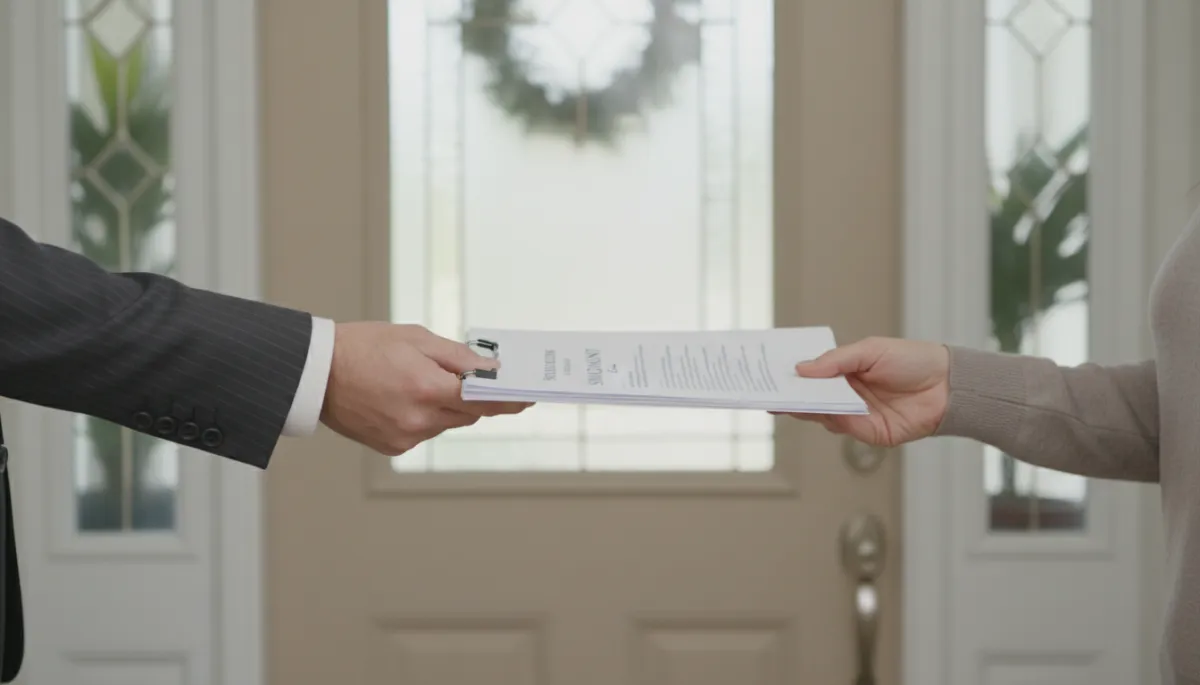
Properly documented substituted service can keep your case on track when defendants avoid contact.
Service by Posting and Mailing (“Nail and Mail”)
In certain limited contexts, California permits service by posting and mailing, sometimes referred to as “nail and mail.” This method is common in unlawful detainer (eviction) actions under CCP §415.45, where a tenant cannot be personally served despite reasonable diligence. With court authorization, the process server may post a copy of the summons and complaint in a conspicuous place on the property, usually the front door, and then mail a copy to the tenant’s address.
Because this method can significantly impact a tenant’s rights, courts require strict compliance with statutory prerequisites and proof of diligent attempts at personal and substituted service. A seasoned process server ensures accurate posting, timely mailing, and detailed documentation of the date, time, and manner of each step, reducing the risk that service will later be challenged as defective.
Service by Mail with Acknowledgment of Receipt
Service by mail with acknowledgment is another alternative recognized under CCP §415.30. Here, the summons and complaint are mailed to the defendant together with two copies of a Notice and Acknowledgment of Receipt and a self-addressed stamped envelope. Service is deemed complete on the date the defendant signs and returns the acknowledgment. This method is often used with cooperative parties, corporate defendants, or counsel willing to accept service on behalf of a client.
While this method can be cost-effective, it is not appropriate for evasive or unresponsive defendants, because the court cannot compel a party to sign the acknowledgment. A California process server can assist by preparing the mailing, tracking delivery, and, if no acknowledgment is returned, promptly advising counsel so that more robust alternative service options can be pursued without losing valuable time.
Service by Publication in a Court-Approved Newspaper
Service by publication is generally considered a method of last resort in California. Under CCP §415.50, a court may authorize publication in a newspaper of general circulation when the party’s whereabouts are unknown and cannot be ascertained with reasonable diligence. Before granting such an order, judges commonly expect a detailed declaration outlining exhaustive efforts to locate and serve the defendant, including skip tracing, contact with known associates, and multiple field attempts at last-known addresses.
Once authorized, a professional process server or affiliated publication service coordinates with a court-approved newspaper to run the summons for the required number of weeks. Accuracy in the legal description of the parties, case number, and publication schedule is essential. Errors at this stage can render service by publication vulnerable to attack, particularly in default judgment proceedings. Experienced process servers help ensure that every technical requirement is met and appropriately documented for the court file.

Courts demand clear proof of diligence before authorizing service by publication in California.
Motion for Alternative Service: Tailored Court Orders
In increasingly digital and mobile environments, traditional statutes do not always anticipate how best to reach a particular defendant. Counsel may therefore file a motion for alternative service, asking the court to authorize a customized method reasonably calculated to provide notice—such as service via email, social media platform, or delivery to a specific intermediary—based on the facts of the case and constitutional due process principles.
The success of such a motion depends heavily on the evidentiary record. A California process server’s declaration detailing unsuccessful attempts at personal and substituted service, results of skip tracing, and any communications with the defendant or third parties can be decisive. Once the court issues an order specifying the approved method, the process server executes that order precisely and provides proof of service that tracks the court’s language, protecting the enforceability of any subsequent judgment.
Skip Tracing: Locating Evasive or Hard-to-Find Defendants
Before resorting to the most extreme alternatives, it is often prudent to invest in professional skip tracing. Skip tracing involves using lawful databases, public records, credit headers, prior addresses, social media, and other investigative tools to identify a current residence, workplace, or contact point for a party who cannot be readily found. In California, reputable process serving firms conduct skip tracing in compliance with privacy laws and industry standards.
Effective skip tracing frequently makes the difference between needing service by publication and achieving valid personal or substituted service. It also strengthens any eventual motion for alternative service by demonstrating that counsel and the California process server exhausted reasonable methods to locate the defendant. For attorneys and law firms, partnering with a process server who offers robust skip tracing capabilities can significantly improve service rates and reduce delays in litigation timelines.

Professional skip tracing often uncovers viable addresses that make personal or substituted service possible.
Why Work with a Professional California Process Server
Whether you are an attorney, law firm, or self-represented litigant, the consequences of defective service can be severe—ranging from vacated defaults to dismissed actions and lost limitation periods. A professional process server understands the nuances of process serving under California law, including when a party truly can’t be served by traditional means and what evidentiary showing courts expect before authorizing alternative service.
From planning a service strategy, documenting diligent attempts, and executing substituted service, to coordinating service by posting and mailing, managing service by publication, supporting a motion for alternative service, and conducting comprehensive skip tracing, an experienced California process server is an indispensable partner in moving your case forward efficiently and lawfully.
Move Your Case Forward with C & P Process Server
If you are facing a defendant or respondent who cannot be easily located or appears to be evading service, you do not have to navigate these complexities alone. C & P Process Server provides knowledgeable, reliable support across California, with experience in all facets of alternative service, including substituted service, posting and mailing, service by mail with acknowledgment, service by publication, motions for alternative service, and strategic skip tracing.
Contact C & P Process Server today to discuss your matter, evaluate your options under California law, and implement a service plan designed to withstand judicial scrutiny. With a dedicated professional managing your process serving needs, you can focus on advocating for your client or advancing your own case, confident that service of process is being handled with precision and care.
